Newsletter Subscribe
Enter your email address below and subscribe to our newsletter
Enter your email address below and subscribe to our newsletter

 ByJohn A
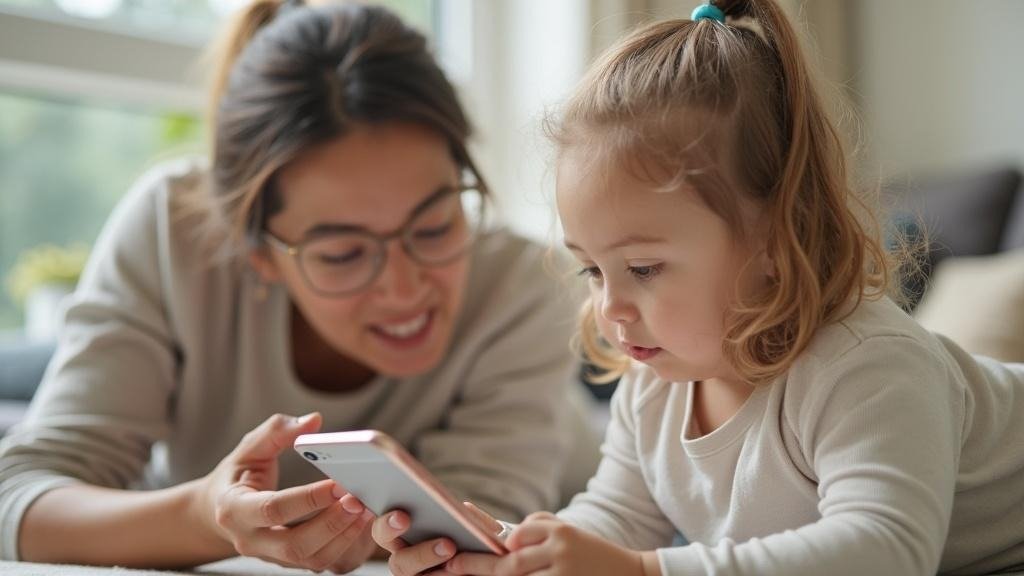
My nephew is five, has a speech delay, and hates flashcards. His SLP is great, but she sees him once a week for 45 minutes. That leaves a lot of days where practice either happens at home or just does not happen. I went looking for apps that could fill some of that gap, and I found a genuinely wide range, from clinical drill tools to AI companions to free library resources. Here is what I found, grouped by who each one actually fits.
Free trial available, then a monthly or yearly subscription managed in device settings. No ads. No data sold. COPPA compliant.
What makes this one stand out is that the whole thing runs on voice. The child simply speaks out loud, nothing to tap through, read, or type. A child just talks. Buddy, the AI companion at the center of the app, listens, responds, remembers the child’s name and favorite topics, and adjusts the difficulty in real time. That matters for pre-readers and for kids who shut down the second they see a screen full of text.
Before each session, Buddy checks in on the child’s mood. That sounds small. It is not. A kid who is already dysregulated gets a softer, quieter Buddy. A kid who is ready to play gets more energy. Session length is adjustable from 5 to 20 minutes, which is a real concession to how attention actually works in this age group.
The games are built around speech targets, sounds like s, r, l, sh, and th woven into play rather than drilled in isolation. Think “What’s That Sound” and “Voice Maze” inside themed worlds (Space, Ocean, Dinosaurs, Forest). Buddy models correct pronunciation without ever labeling an answer wrong.
Parents get a dashboard showing session history, weekly progress cards, and SLP-style PDF reports they can bring to a real therapist. That last piece is genuinely useful. This is a practice and engagement tool, not a replacement for a licensed SLP, and it is honest about that.
See also: How Technology Impacts Human Behavior
Around $14.49 per month, $59.99 per year, or $99.99 as a one-time lifetime purchase.
More than 1,500 activities built around video modeling, where kids mirror real children on screen making sounds and words. Designed for a wide range of needs including apraxia, autism, ADHD, and general speech delay. The video-mirror approach is a specific technique, not just entertainment. Good pick if your child responds well to watching and imitating other kids.
About $59.99 one-time for the Pro version. Built by speech-language pathologists.
Over 1,200 target words organized by phoneme and position (initial, medial, final). Clinical and precise. This is a tool designed to slot into a therapy plan, not replace one. If your child’s SLP has identified specific sounds to target, this gives you structured home practice around exactly those sounds.
Individual apps are priced separately, generally somewhere between $9.99 and $99.99.
Multiple separate apps covering different skills rather than one umbrella product. Strong clinical backing. Better suited to school-age kids and situations where a therapist is already directing the practice goals. Worth asking your child’s SLP which specific Tactus app, if any, fits their current focus.
About $6.99 per month, $4.49 per month on an annual plan, or $115.99 lifetime.
Built for autism, apraxia, Down syndrome, and non-verbal children. Over 200 exercises with AI feedback built in. One of the more affordable options given the depth of its focus on kids who need AAC support or who are just beginning to develop speech.
Evidence-based, spans a broader age range than most apps here. Originally developed for acquired language disorders in adults but expanded to pediatric use. If you have a child with neurological complexity, it is worth checking whether their profile matches what this app was designed for.
Designed around spoken language practice with AI conversation partners. Better fit for school-age kids who already have foundational speech and want to build fluency and confidence talking, rather than kids who are working on early sound production.
Free. The ASHA website has parent guides, activity ideas, and milestone checklists. Not an app in the traditional sense. But if you want grounded, professional information to guide home practice without spending anything, this is the right starting point.
Many public library systems give cardholders free access to literacy apps like Libby, Hoopla, and local digital collections. Reading aloud together, listening to audiobooks, and discussing stories are all speech-supporting activities. Free is free.
Services like Expressable connect families with licensed speech-language pathologists via video. Real assessment, real diagnosis, real treatment planning. If you are not sure whether your child has a delay or just a variation of typical development, this is where to start. Every app on this list, including Little Words, works best as a supplement to professional guidance rather than a substitute for it.
One note before you choose: most of these tools are practice aids. None of them diagnose or treat speech disorders in a clinical sense. If your child is not meeting speech milestones, a licensed SLP is step one.
The mood check-in at the start of each session is a real functional feature, not decoration. When a child signals they are upset or tired, Buddy shifts to a quieter, lower-demand interaction style. Whether that adjustment is meaningful enough to matter depends on the individual child, but the mechanic itself is built into the session flow.
No. Speech Blubs uses video modeling, which is a legitimate technique often used alongside apraxia therapy, but the app cannot assess motor speech patterns, adjust a treatment plan, or catch the specific breakdowns a trained clinician would notice. Think of it as structured practice between appointments, not a clinical program.
Articulation Station organizes over 1,200 words by specific phoneme and word position, which makes it precise for targeting a single sound your SLP has flagged. Otsimo covers a wider range of needs including AAC and early language development, so it casts a broader net. If your therapist has named a specific sound to drill, Articulation Station is the sharper tool.
Hallo is built for kids who already have foundational speech and want conversational practice. A child still working on early sound production, typically under age seven or eight with a delay, would not get much from it. It fits better once a child can hold a basic back-and-forth and the goal shifts toward fluency and confidence rather than sound acquisition.
Based on publicly available product pages, Speech Blubs lists it as a one-time lifetime purchase, not a subscription. That said, app pricing changes, and purchase terms are ultimately governed by what is shown at checkout in your device’s app store at the time you buy. Always confirm before completing a purchase.